Monday, 6 September 2021

The biggest story we tell everyone, and to ourselves!

 "I recognize that I am made up of several persons and that the person that at the moment has the upper hand will inevitably give place to another. But which is the real one? All of them or none?" W, Somerset Maugham

Most of us would like to believe that we know ourselves to some extent, or at-least better than how others would know us. Contrary to the popular belief, psychological research shows that we might not not have an accurate understanding of who we are. Our self perception and self image could actually be clouded by our experiences. What we see around and admire is what we subconsciously feed ourselves to be, and values  we don't agree that we conveniently dissociate our identity from. 

There could be multiple positive and negative consequences, if we were to believe this, and hence understanding how we form our self image becomes crucial. 

In the book titled "The courage to be disliked", the authors speak of how one can unlock the power to become the person one wants to be. They state the example of how even the anger we express, which to our notion is one of the most impulsive emotions, is fabricated. An emotion we evoke to meet our goals - could be to make the recipient of our anger submit to us or to emphasize our power dynamics. And similarly, our behavior is governed by the goal we are seeking and not our past experiences. Very often we justify some of our unwanted personality traits to some past negative experience or trauma, whereas in reality these could be are our little ways to escape from a similar experience that our past might have given us before; a goal seeking mechanism that can be dissociated from its cause. A defensive self loathing behavior, inferiority complex, negative self image that we believe to stem from some kind of past trauma, and hence difficult to change, do then seem possible to break free from. 

Whereas building a negative self image can be detrimental to achieving one's true potential, an overestimation of ones abilities is just as common another form of self deception. More often than not, we are trying to impress others. The first step in this impression forming comes from convincing ourselves to be the version of truth we believe being sought. Be it selling ourselves to to land a perfect job, or projecting a self that conforms to the groups we want to associate with. While a self image that appreciates our self esteem helps us sail through our daily life more comfortably and may also result in improved performance. a distorted exaggerated self image can also be a major limiting factor to our actual growth to becoming one. Be aware and conscious of how much of a person you are as your portrayal of self. 

We draw ourselves from our surrounding. Ever wondered why it was easier to resonate with your family when you were younger or closer to them? Not a generalized statement, but most would have come to a point where our thoughts, beliefs, values start to differ from the very people who laid our foundational system. Do we really change in these aspects? Or do we start believing in a new ourselves that suits our evolved understanding of what is right and wrong, wanted and unwanted. We build a version of ourselves and reverse engineer to either become that, or stay in false delusions. It is said you are average of the people you surround yourself with, be sure to pick your right lot.

If we do have the power to become what starts as a thought in our head, positive affirmations turn out to be one of the most powerful tools to achieve our goals. We all have unconsciously used this power technique, be it waking up to a "Good Morning", that if said in all honesty and belief can really transform how you begin your day. Having myself started to use this lately, saw it remarkably change my self motivation levels. Refraining to comment on its success rate though, it sure does elevate your faith, self confidence and energy that helps in attracting your your dreams. 

If we were to believe that our goals define our self image, and our self perception can be a feed to our subconscious mind, in our journey of self discovery understanding our motivations becomes the key. We may not be anything at all, but a reflection of what we want to be. Chose what you want to be, chose your own story!

Sunday, 5 September 2021

What are you running away from?

 As a furious kid, I remember walking out of my house after an argument with my mother, and I walked until the strangeness of the highway struck a fear that overpowered my anger enough for me to return back. That was my first subconscious attempt of finding escape in travel, only that I come to realize it now, after many a travel experiences and recalling the exact feels they have given me. People travel for many reasons; experience, adventure, nature, spending time with loved ones or exploring oneself; recognizing my motivation behind it to be none of the these, it makes me want to travel less. 

I've escaped corporate pressure with multiple job switches, tricking my mind with some fair justifications. I've escaped family pressure by choosing to visit or talk to them lesser by excusing myself with the busy work life I have. The biggest escape, although, has been running away with the fact that life is mundane. As a Gemini, I've found it extremely difficult to come in terms with stagnancy, leading me to find drama through multiple vents. Travel, finding a new hobby only to leave it very very soon and then hopping to new experiences only to stimulate drama and excitement in my life. The frivolous nature of these experiences come on my face to realize that none of these were means to find happiness, although that did come as a byproduct; but mostly helping me run away from the fact that stays - life is mundane, and at some point you need to accept it and find your peace with it. 

The pandemic was a good attempt from the Universe to help me find some bit of comfort when another day did not bring another new thing for me. Although, with time I also realized how it completely changed me as a person. Early this year, my friend who had known my pre-lockdown self very closely, told me how "I had lost my self". It hit me by surprise. It took me 3 months to understand what she meant, and what she did was correct. I blamed my dissatisfaction with professional life for losing myself, toiled hard to get a work that fit my imagination of a perfect job, and when I did, I couldn't find happiness from that as well. That brings me to my current escape.

I've never drooled over sadness for more than a week, even in the times of biggest heart breaks, but today, I find myself perpetually disinterested in life. Going back to my escape mechanism, I surrounded myself with people or work or trivial attempts of going to new restaurants and cafes in dresses new, only to keep me momentarily interested in life, also very superficially. Living in the moment is fine, but not  having a life you want to live for is scary. I look around to find people working for some serious life goals, and myself to be merely drifting along not having a dream of a future life. From choosing "Life is Beautiful" as my first password, to celebrating little things in life through my blog, I've come to question its whole existence. Call it ageing, being tired of life or depression (which I've tried to escape from being associated with for a long time now). 

Totally clueless of when and how I might be able to find some purpose in life, but starting here with what has always given me solace, writing about it. Leaving with the thought I don't wish to escape anymore - Can life be sad when every aspect of  it (by societal definition) is doing perfectly fine?

Monday, 22 March 2021

The Idiot Box, before it was ~ Part 1

Media and Entertainment Industry has truly seen one of the most positive transformations recently. Content, today, is not just entertaining and popular, it is smart, bold, honest, cinematic and diverse. Although, this change is more prominent in the internet and big screen media, and television or the small screen is somehow still running the formulas introduced in the early 2000s. A millennial kid recognizes television as the non stop "saas bahu opera with innumerable scripted reality shows with almost zero point of differentiation, all pretty much failing to keep pace with the changing values, sometimes even to the extent of being regressive". And I was of a similar opinion, until I watched an interview of the veteran actor Ratna Pathak Shah, quoting her experience of television shows that made her career, she spoke of how television was much ahead of its time before the content we saw growing up finally came to ruin that. Her serial - was a story of two independent girls living in a PG in Mumbai with another guy, wherein the 3 of them had no romantic interest in each other. Thanks to YouTube, I could catch its few episodes and it was a refreshing experience to watch my own version of today's reality in the screen time of 90s. In the last few weeks, I have spent time revisiting some of the old television shows, some popular, rest unknown, but they have all opened my eyes to content that needs some light of appreciation and acknowledgment.

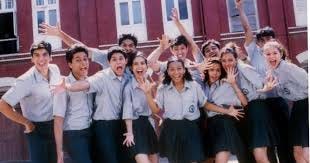
Hip Hip Hooray - Completing 20 years in 2020, Hip Hip Hurray definitely finds itself in the list of some of the most brilliantly written shows in the history of Indian television. Set up in DeNobille High School of Mumbai, the show brought to life a bunch of 12th grade students, we all effortlessly saw ourselves in. After having binge watched the show last weekend, I myself couldn’t refrain from being a small part of the huge group of fanatics the shows credits itself to. Here is my dissection of it!

The characters of the school students were based on different archetypes, or prototypes of common personalities that have existed long in the society. There was a an rebel in Piya, a lover in Alisha, an explorer in Rafey, sage in Mona, jester in George and Cyrus, an innocent in Meera, a ruler in Raghav and a caregiver in Mazhar. Archetypes have been popularly used by brands to build a strong association with their consumers.


The format was structured in a way to highlight the personality trait of each archetype in a couple of episodes and gradually impress the characters’ sketch amongst the audience. With these well pen pictured diverse characters, the show was able to appeal to multiple psychographic segments and broaden its spectator base. And with each episode of the 75 in the run, the show did full justice to its ensemble cast (which is a rarity in Indian media content). A variety of issues concerning each personality type allowed the writer to hook the audience with a fresh plot in every other episode. The writers uncovered topics of mental health, drug addiction with the help of its rebels, it highlighted the pressure to excel through its ruler and sage, and friendship and romance through the lover and the caregiver. The jesters were strategically used to keep the mood light while the story line meandered through some serious issues.

The accurate portrayal of these archetypes would not have been successful had it not been for the perfect casting of the show. Interestingly some character names were the same as the real names of the actors, and as the show progressed there would be little difference spotted between the both otherwise as well. Such was the character impression, some actors even got stereotyped as the personality type they portrayed in the show. Vishal, for example, is known to have played at least a dozen funny comic like character in most of this works. It went on to define the career of its newcomer cast, and most of them are recalled by their screen names even today.

Another key factor for its success was its particularly articulate depiction of progressive values, attitude and lifestyle of the characters that were aspired by many in the target audience. This was done through meticulously covering various activities, likes, dislikes, habits, trends indulged by this target segment in the plot setting of each episode. We were taken to a camp site, a prom night, to examination settings and drawing competition, canteen scenes to house gatherings and much more. The show also did not shy away from content that might have been ahead of its time back then. It showed an unmarried couple living together to teenagers indulging in casual dating, students taking up part time jobs and unconventional career path. In the mid 90s, the young metropolitan audience was already getting introduced to the western content and being influenced by it. They were yearning for an Indian screen character as the new modern moral compass to speak for their changing perspectives. And here we had, Vinay Pathak, as Yadav sir, the most understanding teacher -come-friend as the anchor holding together the script both as an actor and writer of the show.

Finally, what clicked the most was the utmost genuine and honest bond that we saw between the characters. The friendship and chemistry can be seen even outside the screen as the actors speak about the show in a few reunion collaborations. YouTube is flooded with such videos, the fans of the show have managed to keep alive and I also recommend not to miss them after the show refills you with nostalgia!